

Vigilance, Partnership are Part of Protecting Georgia’s Top Industry Amid HPAI Challenges
Avian Flu: Industry Leaders Prioritize Food Safety, Economic Stability
By Jay Jones
jay.jones@agr.georgia.gov
Editor’s Note: This article is the first in a two-part series exploring Georgia’s proactive stance against Highly Pathogenic Avian Influenza (HPAI). Part 1 examines the biosecurity measures and economic resilience of our state’s commercial poultry industry. In our next issue, State Veterinarian Dr. Janemarie Hennebelle will detail the Georgia Department of Agriculture’s rapid response protocols for reported outbreaks and provide essential guidance for owners of small and backyard flocks.
As Georgia navigates another season of Highly Pathogenic Avian Influenza (HPAI) challenges, the message from industry leaders remains steadfast: biosecurity is not just a protocol, but a daily discipline.
Since the current HPAI H5N1 outbreak began in early 2022, it has become the largest and most expensive animal health emergency in U.S. history. Unlike previous outbreaks, this virus has shown a persistent presence in wild bird populations, creating a year-round threat to commercial and backyard poultry flocks alike.
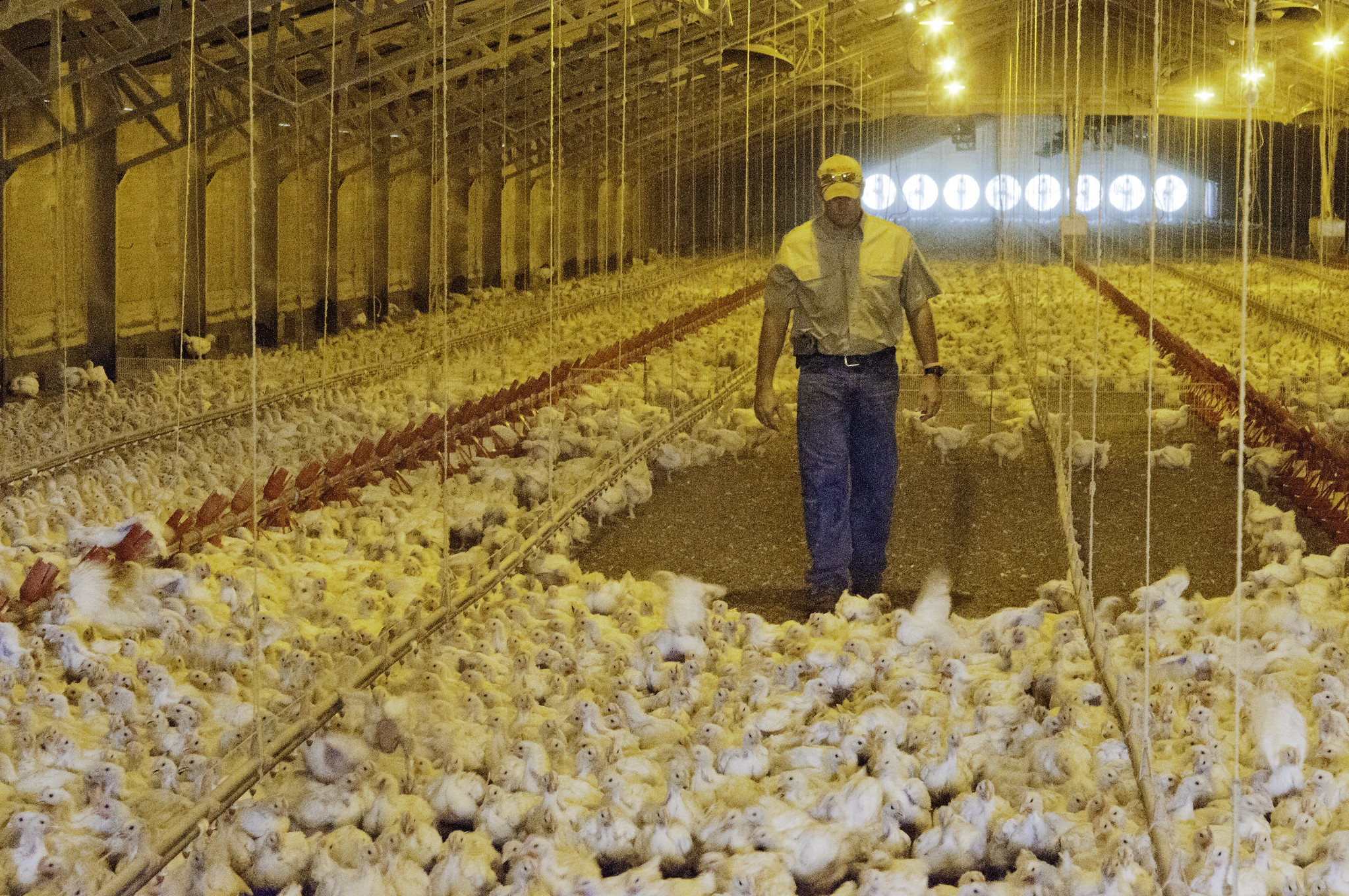
In Georgia, where the poultry industry contributes an estimated $28 billion to the state economy and processes roughly 30 million pounds of chicken daily, the stakes could not be higher. Mike Giles, president of the Georgia Poultry Federation, recently sat down with the Market Bulletin to discuss how the industry and the Georgia Department of Agriculture (GDA) are collaborating to safeguard the state’s 3,300-plus poultry farms.
Market Bulletin: Mike, what is the primary message the Federation is sending to growers right now regarding the current HPAI environment?
Mike Giles: The first message, and the one we deliver year-round, is to be as diligent as possible about biosecurity. Everyone knows the message, but it is vital to emphasize it now. We also need growers to be prepared to respond. If an incident happens on your operation or in your control area, you must know your role and how to collaborate with the GDA and USDA. Because we’ve had incidents recently, those roles are becoming clearer and more efficient. The GDA team is doing an amazing job hitting milestones for depopulation and disposal so we can get farms back to normal operations quickly.
MB: Commissioner Harper often refers to the “gold standard” of biosecurity. What does that look like on the ground? Is it about new technology or something else?
Giles: In most cases, it’s not a matter of major capital investments. It’s about understanding principles and implementing them every day without fail. The basic principle is drawing a “line of separation” between the outside environment and the inside of the chicken house. You must assume the outside is contaminated. When you step across that line, you cannot take anything inside that could infect the birds. It takes discipline to make that a habit every single time you are around your flock.
MB: We’ve been dealing with avian influenza for years. How has the approach changed since the major 2015 outbreak?
Giles: That 2015 outbreak was devastating, but it led us to emphasize biosecurity in a different way. Through the Georgia Poultry Lab Network, we began having grower meetings where companies and growers would hear directly from experts like Dr. Louise Dufour-Zavala. We launched the “All In or All Gone” educational campaign, which we still use today. It’s a constant effort because farms have new employees who must be trained. You just can’t let your guard down.
MB: How would you describe the current coordination between the poultry industry and the state government?
Giles: It’s been excellent. The department is always available. When there is an incident, the Federation is invited into the Emergency Operations Center. We participate in daily operations calls so we are aware of everything happening. GDA and USDA personnel are on the ground interfacing directly with the farmers. I don’t believe our avenues of communication could be any stronger.
MB: Georgia is the top poultry state in the nation. Beyond the individual farmer, what is at stake for the average Georgian?
Giles: Poultry is the largest segment of agriculture, and agriculture is the largest segment of business in Georgia. What affects poultry affects the state’s economy. That is why the legislature has put resources in place to respond. We are constantly monitoring through the lab in Gainesville, not just for production reasons, but to avoid trade restrictions.
It is important to have perspective: While we deal with serious incidents, we have over 3,300 other poultry farms operating without HPAI. We process about 5 million chickens per day in Georgia. We are managing through this and continuing to produce food for the country and the world.
MB: That leads to the big question for consumers. Is the food supply safe?
Giles: Food safety is a top priority, along with the safety of our workers. Every single flock is tested for avian influenza before it leaves the farm and heads to the consumer. Poultry that enters our food supply has never been safer. We have the safeguards in place to ensure that remains the case.
MB: There has been some talk recently about adding poultry to farm insurance programs, similar to how row crops are indemnified. Is that something the Federation is looking into?
Giles: I believe there was a study or pilot project mentioned in the last Farm Bill. I’m not sure where that stands currently, but it is worth exploring. However, we have to see if it makes sense for the grower. Right now, there is indemnity in place. With 3,300 farms and only a few cases, a grower has to decide if the risk justifies the cost of another premium. There are still a lot of unanswered questions there.
______
A Conversation with Dr. Janemarie Hennebelle on Georgia’s HPAI Response
HPAI Response: Early Detection and Reporting Remain Key to Managing HPAI Risk
By Jay Jones
jay.jones@agr.georgia.gov
This article is the second in a two-part series exploring Georgia’s proactive stance against Highly Pathogenic Avian Influenza (HPAI). In this installment, State Veterinarian Dr. Janemarie Hennebelle discusses the Georgia Department of Agriculture’s rapid response protocols for reported outbreaks and offers essential guidance for owners of small and backyard flocks. Part 1 of this series, featuring Mike Giles of the Georgia Poultry Federation, appeared in the Feb. 18 issue.
The detection of Highly Pathogenic Avian Influenza (HPAI) in Georgia – most recently in Walker and Hart counties – has put the state’s poultry industry and backyard flock owners on high alert. Georgia, often cited as the “Gold Standard” for poultry production and biosecurity, relies on a sophisticated web of state, federal, and industry partners to contain the virus.
When an outbreak is confirmed, the Georgia Department of Agriculture (GDA)’s Animal Health Division works in tandem with the U.S. Department of Agriculture (USDA) and the Georgia Poultry Laboratory Network (GPLN) to implement a rapid response protocol designed to protect both the economy and the food supply.
State Veterinarian Dr. Janemarie Hennebelle recently sat down with the Market Bulletin to discuss how the department responds to positive cases and what small flock owners need to do to protect their birds.
Market Bulletin: When a phone call comes in regarding a potential positive case, how does the department respond immediately?
Janemarie Hennebelle: There are really two different routes. Folks either call the GDA Animal Health office directly, or they call the avian influenza hotline (770-766-6850), which is managed through the Georgia Poultry Lab Network. Either way, we coordinate the GDA teams with the lab staff to determine who is closest and can get there in a timely manner. We deploy to collect samples on any poultry that might have passed away or birds that are actively sick.
We are fortunate in Georgia to have three lab resources – the main poultry lab and the UGA labs in Tifton and Athens – so we can typically get samples turned around and let folks know within about 24 hours if it’s avian influenza or not.
But I also want to highlight that both our backyard flock owners and our commercial companies are really good about reporting sick birds. That is how we catch avian influenza early. Because people take the time to call and report, and we are able to test and contain the situation.
MB: Once a case is confirmed, what are the steps for securing the facility? When do you establish a 10-kilometer zone?
Hennebelle: I want to be clear that the response looks different for backyard flocks versus commercial operations. For backyard flocks, the premises where the poultry are located is placed under quarantine. However, the 10-kilometer (6.2-mile) circle and movement controls come into play when we have a detection in a commercial flock. In those cases, all commercial flocks within that circle are also quarantined. It’s about preventing the ongoing spread. When you’re talking about a commercial site, it could be 40,000 chickens instead of 10, so controlling that area is vital.
MB: For those backyard owners, what are the top three biosecurity measures they should be taking right now?
Hennebelle: There are great resources through GDA, UGA Extension and the USDA, but if I had to pick three:
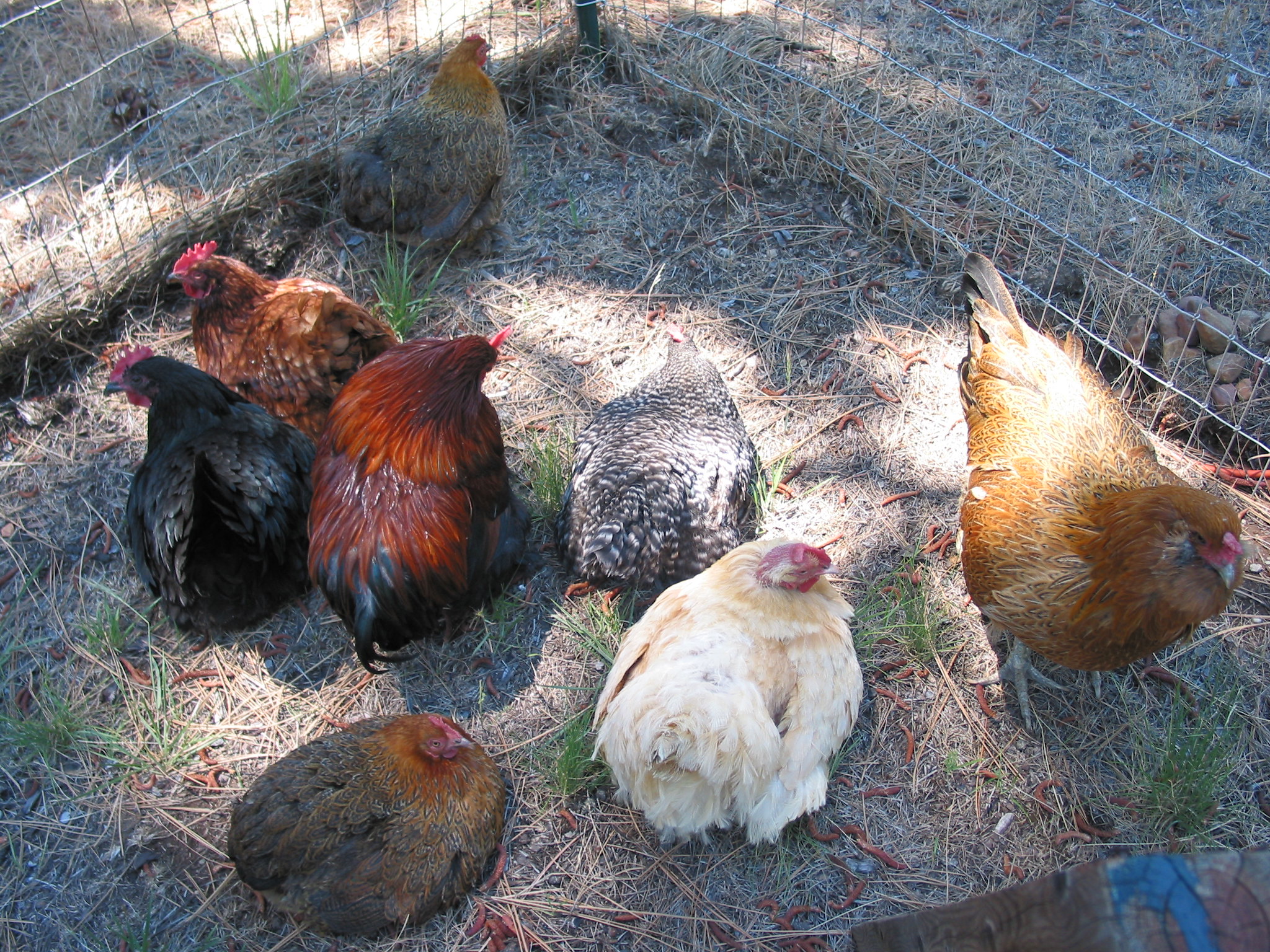
- Containment: Look at your setup. Do you have the ability to contain your birds away from wildlife? We know wild birds are the source, so keeping them separate is number one.
- Separate by Species: If you have chickens and ducks or other species, try to create separate areas for them.
- Limit Visitors: Be mindful of visitors who have birds at home, and be careful about visiting other flocks yourself. You don’t want to carry something to your neighbor, or have them carry it to you.
MB: Public concern often turns to the food supply when these headlines break. What are the fail safes in place to protect consumers?
Hennebelle: People should be very reassured. Our poultry flocks are tested regularly at GPLN as part of the National Poultry Improvement Plan, even outside of a disease response. They are tested before they go to slaughter. When we have an active control area, there is additional testing to ensure that we can safely move birds knowing they are negative. Both backyard owners and commercial companies are very responsible about reporting sick birds. That is how we catch this early – birds simply do not have the opportunity to enter the food chain.
MB: How is the response coordinated between the state, the federal government, and the private poultry industry?
Hennebelle: We use a structure called the Multi-Agency Coordination System. It brings all parties to the table – GDA, USDA, GPLN, Public Health, and commercial industry. We meet regularly, sometimes in person at our Agricultural Emergency Operations Center (EOC) and sometimes virtually. This ensures everyone knows where we are in the course of the response. We have very open communication, which is essential for a fast and effective rollout.
Hennebelle also encouraged livestock owners to visit the GDA’s Biosecurity for Livestock Owners webpage (agr.georgia.gov/animal-biosecurity). The site offers instructional videos and other resources on basic biosecurity practices that can be applied to a farm operation to prevent the introduction or spread of infectious diseases. The resources include information for backyard flocks as well as small cattle, hog, equine, sheep, and goat operations.
The Georgia Department of Agriculture’s response to HPAI is a tiered strategy focused on The Five Cs: Check, Confine, Clean, Control, and Communicate.
Surveillance: The GDA maintains a year-round surveillance program. Since wild waterfowl are natural carriers of the virus, the state monitors migratory patterns and works with the Department of Natural Resources to test wild populations.
The 10-km Control Zone: When a commercial positive is identified, the 10-kilometer zone acts as a biological buffer. Inside this zone, no poultry or poultry products can move without a permit issued by the GDA. This standstill allows officials to test every flock in the zone to ensure the virus hasn't hopped from one farm to the next.
Depopulation: In the unfortunate event that a flock tests positive, federal and state guidelines require the humane depopulation of the birds on-site to prevent the virus from spreading to other flocks.
State-Wide Protections: During an active HPAI response, the State Veterinarian may issue orders suspending poultry exhibitions, swap meets, and flea markets to prevent the commingling of birds from different locations.